
If you want one ground sheet that works under almost any small tent, the Clostnature Heavy Duty Floor Saver is the top pick based on specs and reviews: it packs down to roughly the size of a phone and still shrugs off gravel. A tent footprint is a sheet of coated fabric you put under your tent to stop rocks, roots, and grit from wearing holes in the floor. Tent floors are the thinnest, most expensive part of a tent to replace, so the sheet under them earns its keep fast.
The two things that decide whether a footprint helps or hurts are size and waterproof rating: it should sit an inch or two inside your tent floor edge, and a PU coating of 2000mm or better keeps ground moisture from wicking up on a wet night. A footprint that sticks out past the rainfly turns into a rain gutter, funneling water straight under your tent. Weight matters too. A 10-ounce polyester sheet disappears in a backpack, while a 2-pound poly tarp is a car-camping tool. If you’re still building out your kit, our ultimate beginner’s guide to camping covers what else belongs in the pile.
Selections cover lightweight backpacking sheets, brand-matched footprints cut for specific tents, and a heavy multipurpose tarp that does double duty as a shelter, based on manufacturer specs and verified buyer feedback.
Picks are based on manufacturer specs, verified buyer photos, and owner reviews — not hands-on testing.
Best for most campers: Clostnature Heavy Duty Tent Footprint
Best for backpackers counting ounces: REDCAMP Ultralight Tent Footprint
Best for bigger family tents: ALPS Mountaineering Tent Footprint
Best for car camping and shelter duty: Amazon Basics Waterproof Camping Tarp
Best for Gazelle T4 owners: Gazelle T4 Tent Footprint
Clostnature Heavy Duty Tent Footprint

Buy this one if you want a budget-pick ground sheet that fits most one- and two-person tents and weighs less than a can of soda.
Price tier: $
Pros
- 87″ x 59″ covers most 2-person tents with room to spare
- Folds into the included drawstring bag, about phone-sized
- 210T ripstop polyester handles gravel and pine duff
Cons
- Thinner than a classic blue poly tarp, so it feels flimsy at first
- No grommets or webbing loops for staking
- May overhang small tents unless you fold the edges
The fabric is thin enough that new campers sometimes question it, and then it goes three seasons without a puncture. That’s the trade-off with lightweight ripstop: it feels delicate and outperforms its weight.
At 9.8 ounces it rides fine in a backpack, though it’s just as at home under a car-camping dome. The extra width covers vestibule space, which is handy for keeping boots off wet dirt. Fold any overhang under the tent before the rain starts.
REDCAMP Ultralight Tent Footprint
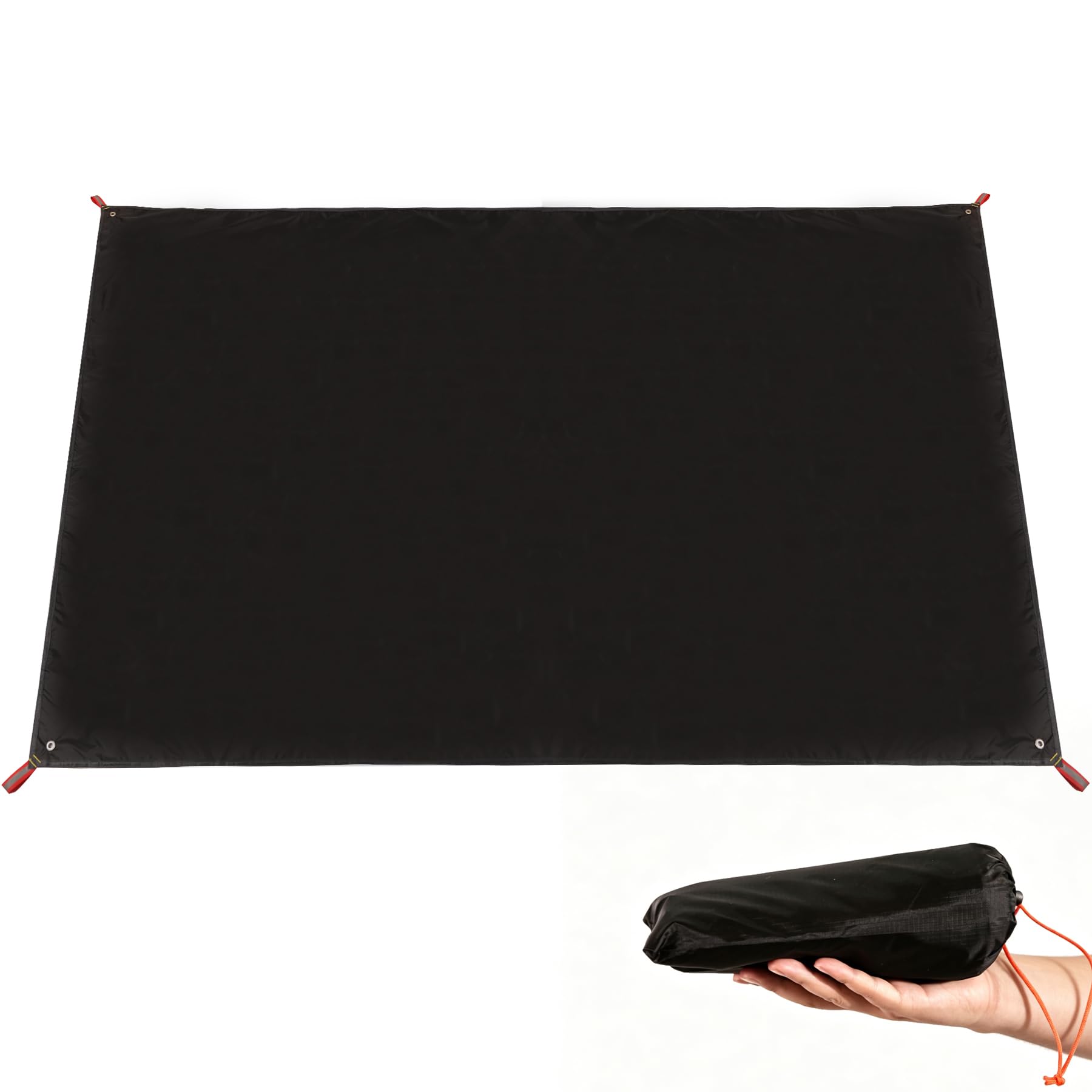
Get this if you’re carrying your tent on your back and want a stated waterproof rating instead of a vague “waterproof” claim.
Price tier: $
Pros
- PU 2000mm coating, a real number you can compare
- Under 9 ounces and packs to roughly 3″ x 8.6″
- Narrower 55″ width sits cleanly under most solo tents
Cons
- 55″ is tight under some wider 2-person floors
- No tie-out points for canopy use without adding your own
- Black fabric soaks up sun heat when used as a picnic mat
That 2000mm rating means a column of water 2,000mm tall can sit on the fabric before it seeps through. For ground moisture, that’s plenty. Wet meadow sites are where you notice the difference.
The narrower cut is the selling point for solo hikers. Less material hanging past your fly means less rain sneaking underneath. Measure your tent floor before ordering, since a few two-person tents run 58 inches or wider.
ALPS Mountaineering Tent Footprint

Pick this if you own an ALPS tent, or any 4-person tent close to 8’2″ x 7’2″, and you want corner loops that actually hold the sheet in place.
Price tier: $
Pros
- Webbing loop corners let you stake it down before pitching
- Sized for 4-person tents at 58.5 square feet of coverage
- Limited lifetime warranty from the manufacturer
Cons
- 1500mm coating is lower than the ultralight picks
- 17 ounces is heavy for backpacking
- Cut for ALPS tents, so fit varies with other brands
Those webbing loops solve a real annoyance. Stake the corners first and the sheet stops sliding while you thread poles, which is worth a lot when the wind picks up.
The 1500mm rating handles damp grass and light puddling, though a saturated site will eventually let moisture through. This is a car-camping and family-tent piece, the kind of thing that pairs well with the setup advice in our family camping guide.
Amazon Basics Waterproof Camping Tarp
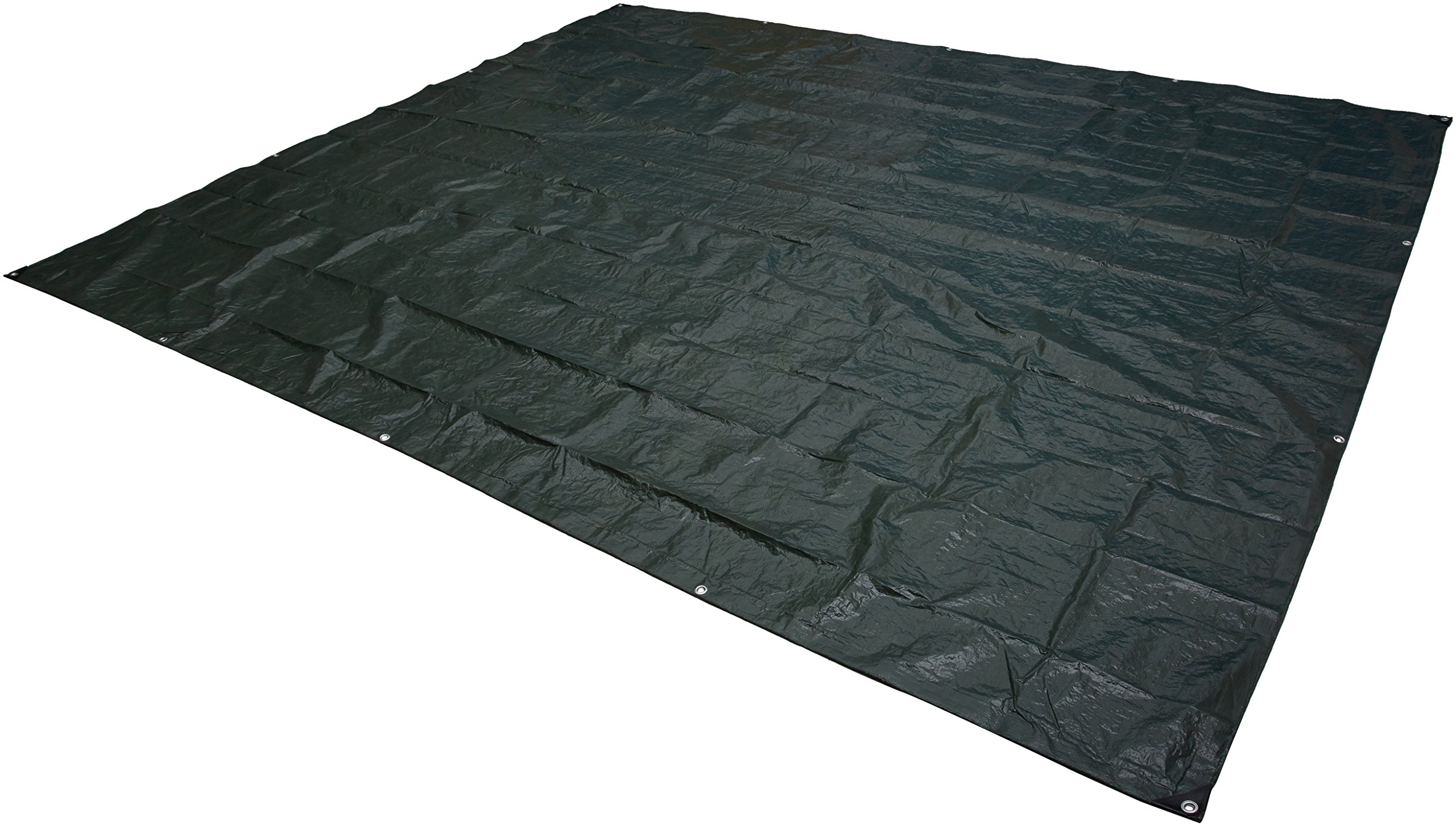
This is the one to buy if you want a single tarp that goes under the tent, over the picnic table, or across the firewood pile.
Price tier: $
Pros
- 9.5′ x 11.3′ covers large tents or rigs as a rain fly
- Grommets and reinforced corners for rope and stakes
- Polyethylene lamination on both faces sheds water well
Cons
- 2.2 pounds, too heavy to backpack with
- Needs folding under to fit most tent floors
- Crinkles loudly and doesn’t pack small
Poly tarps like this are the workhorse of car camping. String it between trees for a kitchen shelter, then drop it under the tent the next night. The grommets take paracord without tearing.
The catch is size. At 9.5 by 11.3 feet it’s bigger than nearly every tent floor, so fold the edges inward or you’ll wake up in a puddle. Keep it in the trunk, not the pack.
Gazelle T4 Tent Footprint

Buy this only if you own a Gazelle T4 hub tent, in which case it’s the easiest fit decision you’ll make all season.
Price tier: $$
Pros
- 3000mm waterproof rating, the highest in this group
- Heavier 300D Oxford polyester resists abrasion
- Includes four tack-down stakes and a carry bag
Cons
- Fits only Gazelle T4 models (GT400GR, GT401SS, 22272, 30400)
- 2 pounds and bulkier than ultralight sheets
- Cut slightly smaller than the tent floor
The 300D fabric is noticeably thicker than the 210T sheets above, closer to a light tarp in feel. On packed dirt and gravel pads it takes abuse without thinning out.
That slightly undersized cut is deliberate and helps, since no fabric pokes past the tent edge to catch rain. The included stakes hold it flat while you pop the hub tent open. It costs more than a generic tarp, and the perfect fit is what you’re paying for.
Buying Guide
Match the footprint to your tent floor first, then worry about weight and fabric. A sheet that’s an inch or two smaller on each side beats a bigger one every time.
Size and Fit
Measure your tent floor, not the tent’s listed capacity. A “2-person” tent can range from 50 to 60 inches wide depending on the model.
|
Tent size |
Typical floor |
Footprint target |
|---|---|---|
|
1-person |
30″ x 84″ |
28″ x 80″ |
|
2-person |
50-58″ x 88″ |
48-55″ x 84″ |
|
4-person |
84″ x 96″ |
80″ x 92″ |
|
6-person |
100″ x 120″ |
96″ x 116″ |
If your sheet is too big, fold the extra under. Never let it stick out past the rainfly.
Fabric and Waterproof Rating
Waterproofing is measured in millimeters of hydrostatic head. Higher numbers mean the fabric resists more water pressure before leaking.
- 1500mm: fine for dry ground and light dew
- 2000mm: the sweet spot for most three-season camping
- 3000mm and up: wet climates, snow melt, saturated sites
Polyester in 210T ripstop is the standard for lightweight sheets. Heavier 300D Oxford and laminated polyethylene trade packability for abrasion resistance.
Weight and Packed Size
Backpackers should stay under 12 ounces. Car campers can ignore weight entirely and buy the thicker option.
A sheet that stuffs into a phone-sized bag is easy to bring every trip. A 2-pound tarp that needs its own corner of the trunk gets left behind.
Attachment Points
Webbing loops or grommets at the corners let you stake the sheet before pitching. Without them, a breeze will slide the whole thing off your site while you’re threading poles. Grommets also open up canopy and rain-fly use.
Frequently Asked Questions
Is it worth getting a tent footprint?
Yes, if you camp more than a few nights a year. Replacing a worn tent floor costs far more than a ground sheet, and a footprint also keeps dirt off the tent bottom so packing up stays quick and clean.
Is a tent footprint just a tarp?
A footprint is a tarp cut to match a specific tent floor and built from lighter, tighter fabric. A generic poly tarp works, but you’ll need to fold the edges in so rain doesn’t collect between the tarp and your tent floor.
What size tent footprint should I choose?
Choose one that sits one to two inches inside your tent floor on every side. Measure the actual floor dimensions rather than trusting the person rating, since a 2-person tent can be anywhere from 50 to 58 inches wide.
What is the best waterproof tent footprint for camping?
For most campers, a 210T ripstop polyester sheet with a PU 2000mm coating handles wet ground without adding real weight. If you camp in consistently soggy places like the Pacific Northwest, step up to a 300D fabric rated to 3000mm.
What can I use instead of a tent footprint?
A hardware-store poly tarp, a painter’s drop cloth in 4- to 6-mil plastic, or Tyvek house wrap all work. Tyvek is the backpacker favorite at roughly 2 ounces per square yard; cut it a couple inches smaller than your tent floor and let it soften up before the first trip.
Before your next trip, lay your tent out in the yard, put a tape measure across the floor, and write those two numbers in your phone. Every footprint decision after that takes about thirty seconds.