
If you want one propane burner that handles a turkey fry, a 15-gallon brew boil, and a pot of crawfish without complaining, get the GasOne 200K BTU single burner. It’s heavy, it’s cheap for what it does, and it puts out more heat than most home cooks will ever need. Two numbers decide almost every propane burner purchase: BTU output and how tall the frame sits.
BTU is the heat rating. A burner’s BTU rating tells you how much raw heating power it delivers. A 22k BTU camping stove simmers chili and fries eggs, while a 100k to 200k BTU single burner boils a 10-gallon pot of water.
Higher heat also means faster propane use. A 20-pound tank that lasts a weekend on a camp stove might drain in a few hours on a high-output burner running wide open.
Before you buy, check three things: the height of the frame (tall legs for deep fry pots, low profile for tabletop wok cooking), whether the regulator is adjustable high-pressure 0 to 20 PSI or a fixed low-pressure camp regulator, and whether the hose fitting matches your tank.
The heavy burners below all use standard US tank threads, so if you’re cooking outside the States you’ll need an adapter. Cast iron burners hold up better than stamped steel over years of spilled oil and rain, and a wide burner ring spreads heat across a big pot base instead of scorching one spot.
Picks are based on manufacturer specs, verified buyer photos, and owner reviews — not hands-on testing.
Best for turkey frying and big brew boils: GasOne 200K BTU Propane Burner
Best for car camping meals: Coleman Triton 2-Burner Propane Stove
Best budget pick: GasOne High Pressure Single Propane Burner
Best for cooking two big pots at once: Outvita 2 Burner Propane Gas Stove
Best lightweight high-heat burner: CONCORD 12″ Block Burner
GasOne 200K BTU Propane Burner
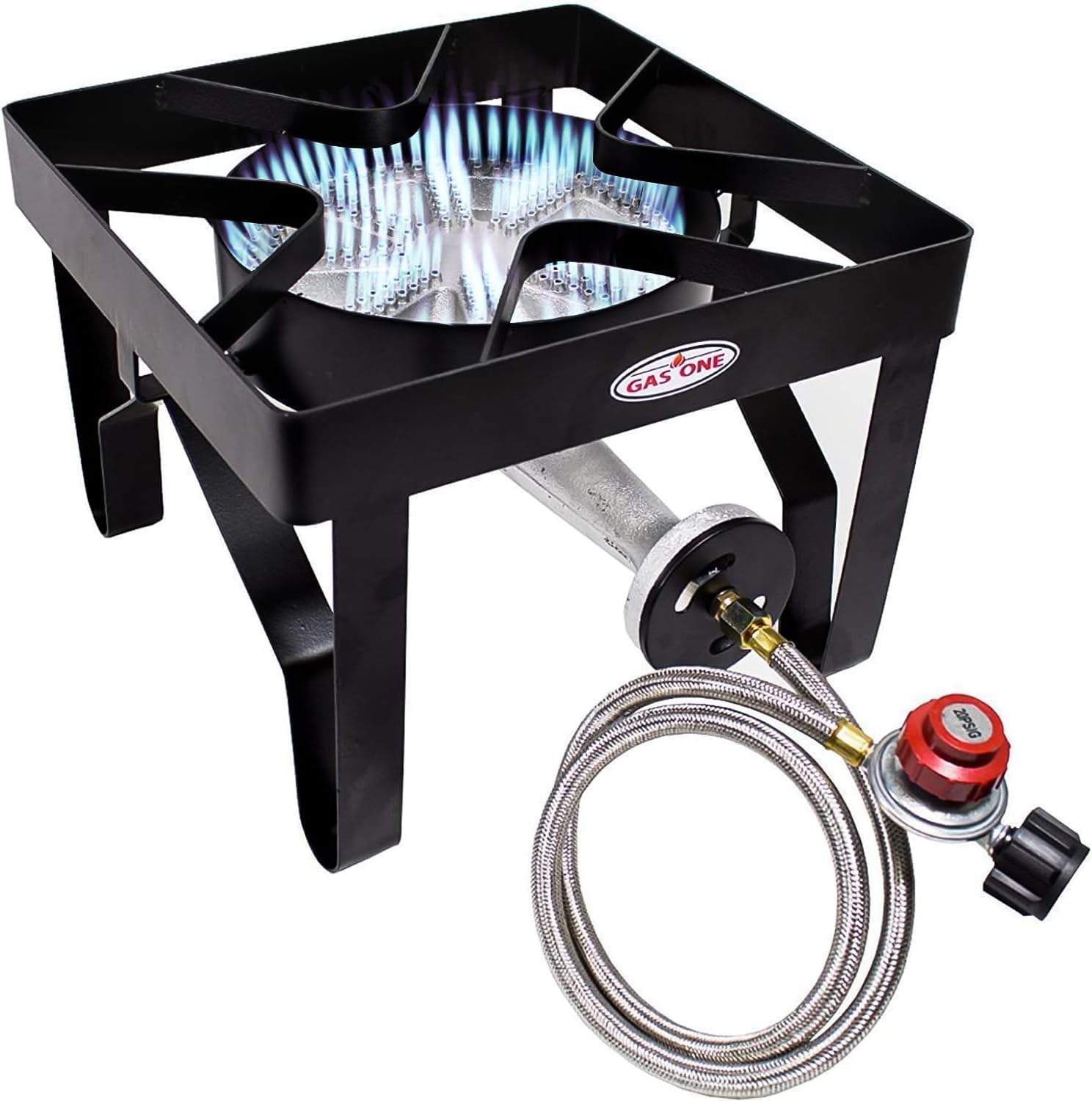
Buy this one if you fry turkeys, brew beer, or boil giant pots and want a frame that won’t wobble under 60 pounds of liquid.
Price Tier: $
Pros
- Massive 200,000 BTU output brings a 50-liter pot to a rolling boil fast
- 24-pound steel frame with cast iron burner feels rock solid
- Adjustable 0 to 20 PSI regulator with a steel braided hose included
Cons
- Heavy and bulky at 16 inches square, not a backpacking or tailgate-friendly size
- Burns through propane quickly on high during long cooks like maple syrup boils
- US tank threads only, so international users need an adapter
This is the burner people buy once and keep for a decade. The 12-inch-tall frame puts a fry pot at a comfortable working height, and the wide burner ring spreads flame across a big flat bottom instead of hammering the center.
Flame control is better than the raw BTU number suggests. Reviewers report being able to dial it down to hold a simmer for a pressure canner, then crank it for a low country boil. Owners also note that it runs quiet, avoiding the jet-engine howl typical of cheaper burners.
The trade-off is fuel. Plan on a full 20-pound tank for an all-day sap boil, and keep a spare nearby. This kind of high-output cooking pairs well with the group meals covered in our ultimate beginners family camping guide.
Coleman Triton 2-Burner Propane Stove
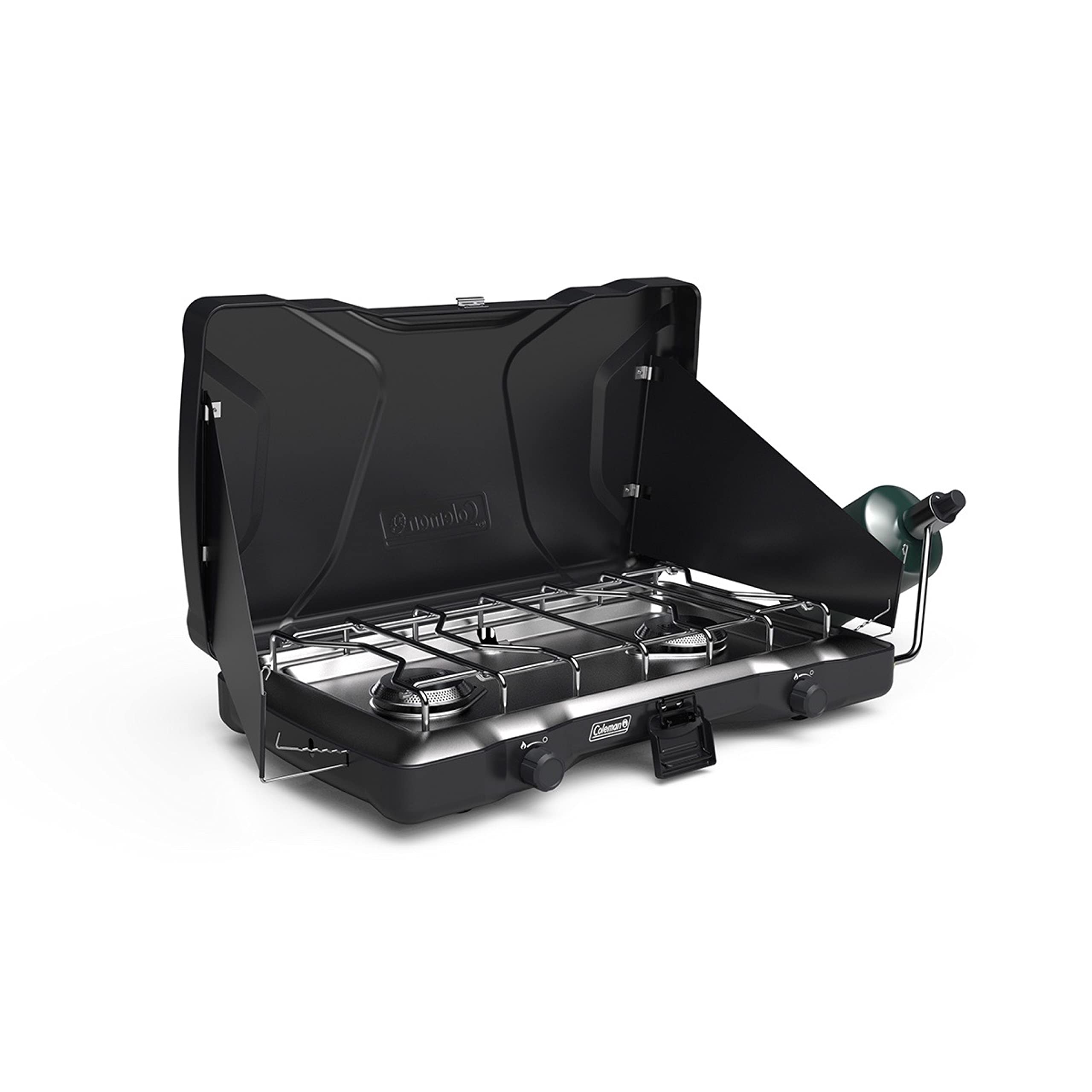
Get the Triton if you’re cooking actual meals at a campsite, not boiling 10 gallons of anything.
Price Tier: $
Pros
- Only 5 pounds and folds flat with a latch that stays shut in the car
- Two wind guards keep the flame alive in a steady breeze
- Removable chrome grate wipes clean after bacon grease
Cons
- 22,000 total BTUs won’t heat a large stock pot quickly
- About an hour of high-heat cooking per 16-ounce cylinder
- Fits a 12-inch and a 10-inch pan, so no room for oversized cookware
This is the camping stove that lives in the back of the truck. Two independent burners mean coffee on one side and eggs on the other, and the knobs turn far enough to hold a real simmer without scorching sauce.
Wind is what kills most camp stoves, and the side guards here do honest work. Buyers frequently highlight that the shields keep the burners lit in steady coastal breezes that blow out unshielded stoves.
Fuel is the running cost. Small green cylinders empty fast, so grab a hose adapter and run it off a 20-pound tank for longer trips. New to all of this? Our beginners guide to camping covers what else belongs in the kitchen box.
GasOne High Pressure Single Propane Burner
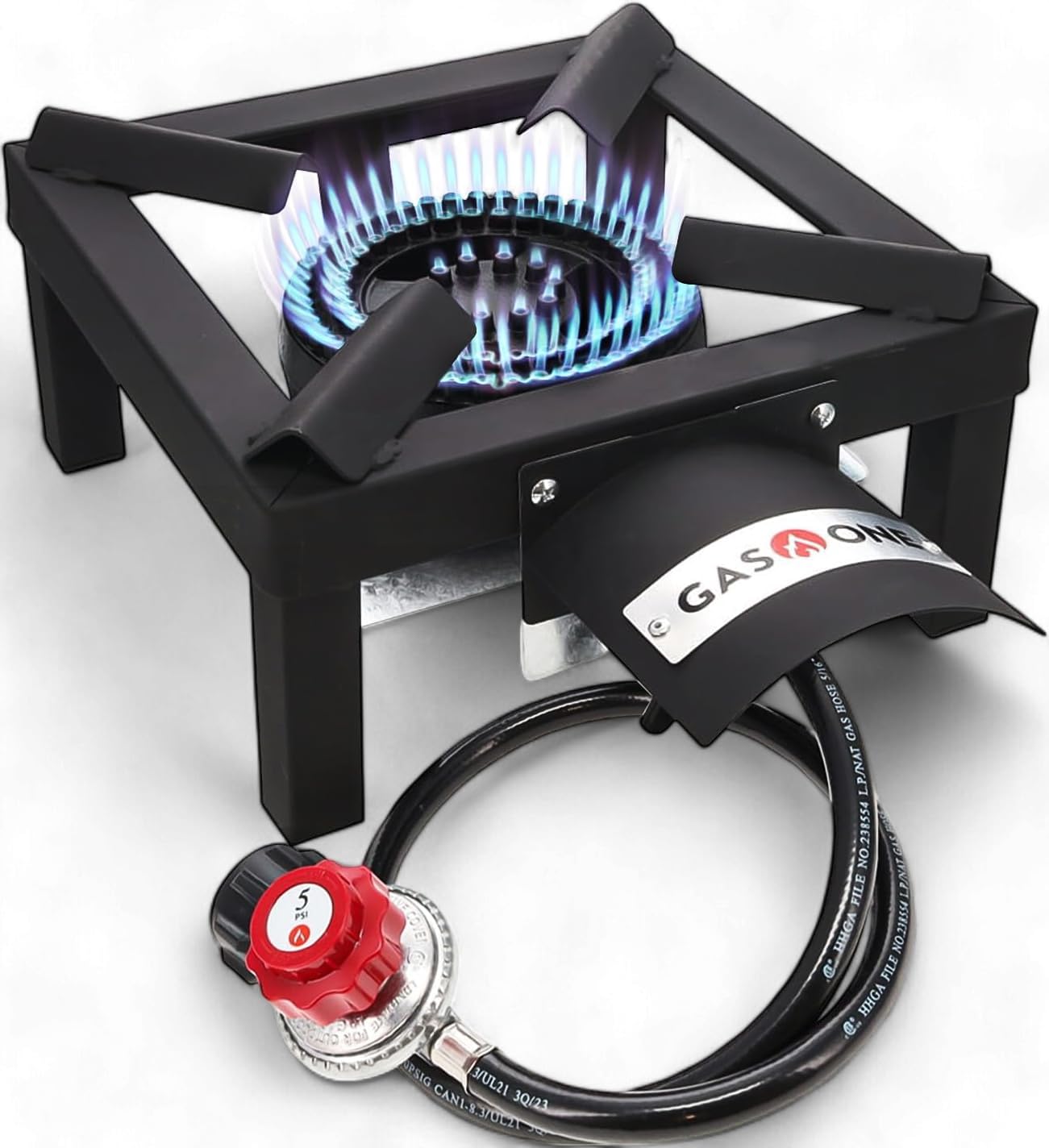
This is the budget pick that punches way above its price for canning, seafood boils, and tailgate cooking.
Price Tier: $
Pros
- Compact 10-inch footprint stores in a milkcrate or camp bin
- Top heat guard blocks oil spills and keeps flame off the hose connection
- Cast iron burner head with lots of ports, which helps in wind
Cons
- Low 5.6-inch profile means tall fry pots sit awkwardly close to the ground
- Needs a long-reach lighter, since the valve is set back from the flame
- Simple assembly required with a screwdriver and small wrench
At this budget tier, this burner does most of what a jet burner does, delivering enough output to bring large pots of water to a fast boil.
The heat shield underneath is the part that earns its keep. It protects wood decks or folding tables from direct heat, though placing a concrete paver underneath is still recommended.
Reviewers note that it may sputter for a second or two on lighting while residual factory oil burns off. Once cleared, buyers report that the flame settles into a steady blue cone with smooth knob adjustments.
Outvita 2 Burner Propane Gas Stove
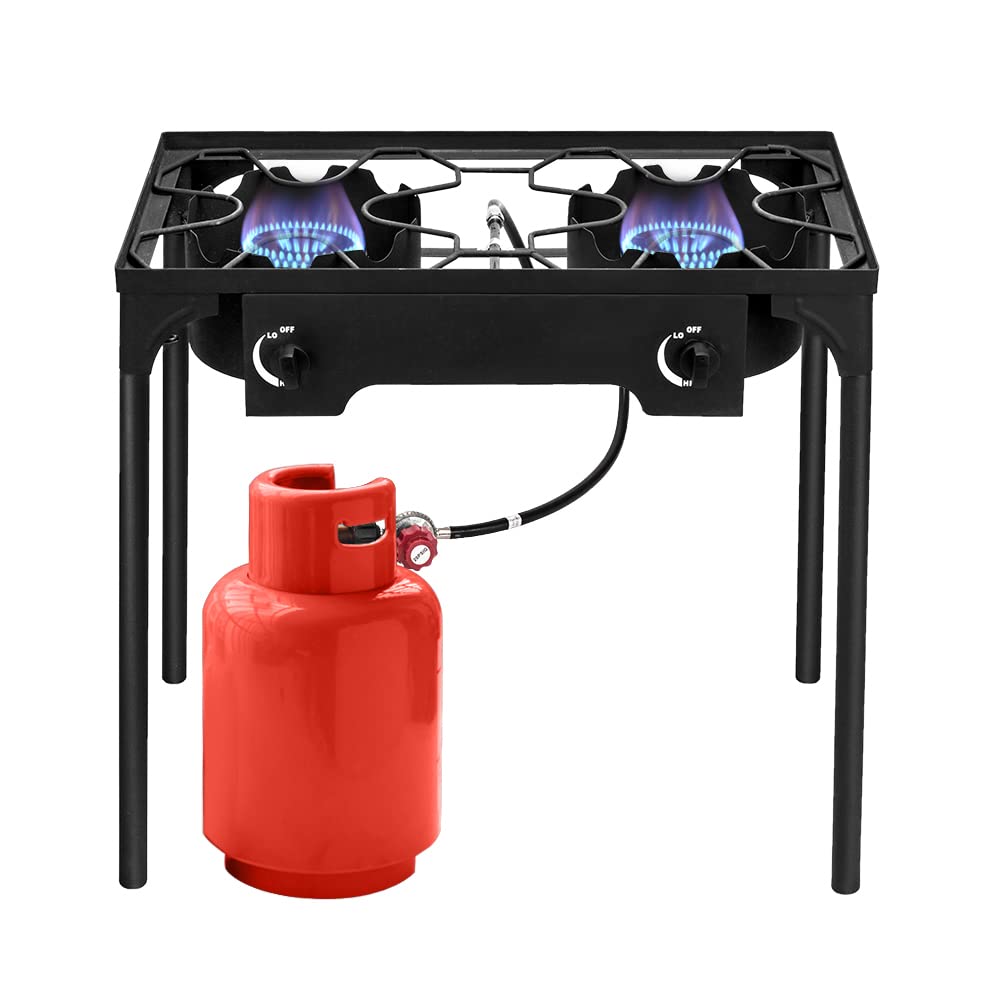
Choose this double-burner stand if you cook for a crowd and need two large pots going at full heat.
Price Tier: $
Pros
- 75,000 BTU per burner, 150,000 BTU total, with separate control knobs
- Stands about 30 inches tall, so you cook standing up instead of crouching
- Legs unbolt in minutes for flat storage or transport
Cons
- Over 34 inches long, which takes real space in a truck bed or garage
- Powder-coated iron needs to stay covered or it will rust outdoors
- Fewer customer reviews than the established brands here
This is an outdoor kitchen more than a camp stove. Boil corn on one burner while a fryer heats on the other, both at temperatures a kitchen range can’t reach.
Working height is the underrated feature. Stirring a heavy pot at counter level beats hunching over a low burner for two hours, and it keeps kids further from open flame.
Independent regulators let you run one side hard and hold the other at a simmer. Bring the included cover, or store it inside between cookouts.
CONCORD 12″ Block Burner
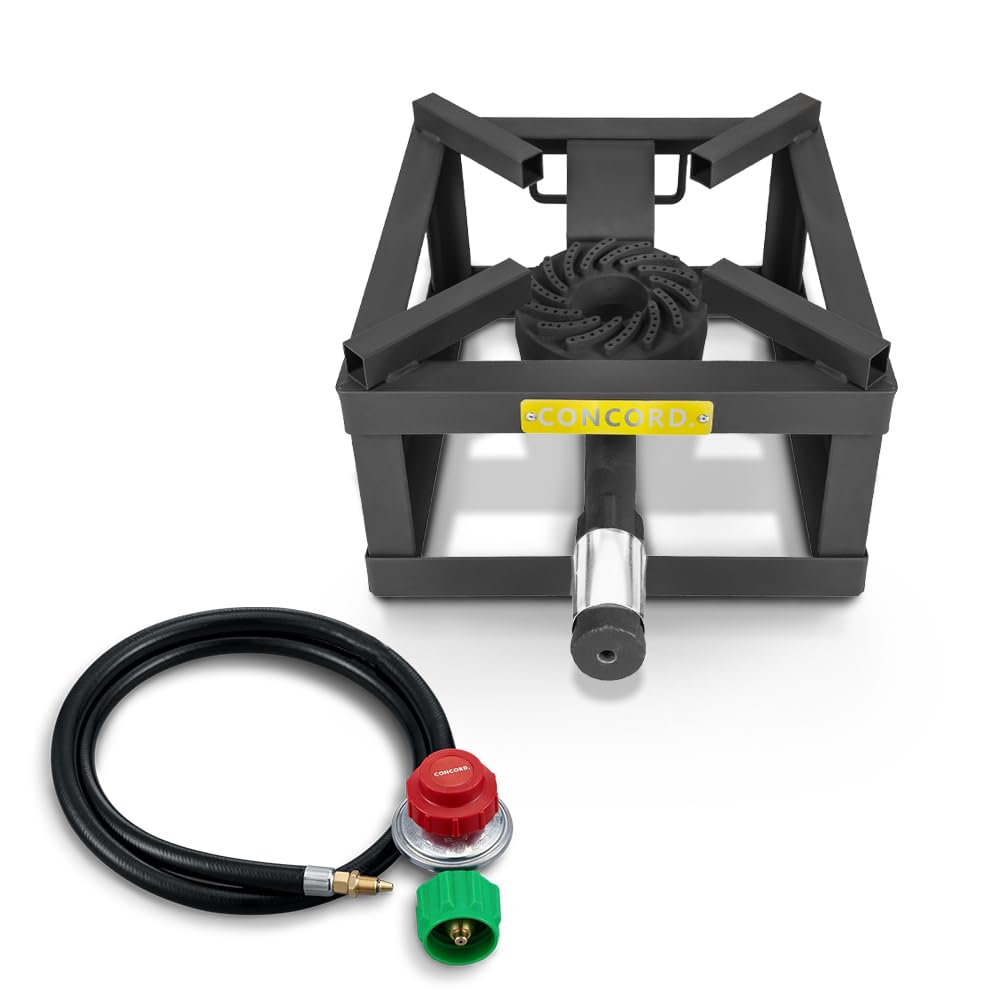
Grab the Block Burner if you want serious heat you can carry with one hand, especially for wok cooking.
Price Tier: $
Pros
- 100,000 BTU at just 9 pounds, with a built-in carry handle
- Fully welded 360-degree frame that shrugs off being tossed in a truck
- Round burner head cradles a carbon steel wok perfectly
Cons
- 6.4 inches tall, so it’s really a tabletop or ground-level burner
- Flame adjustment is a single screw on the regulator, not a smooth knob
- Small 12.25-inch top limits how wide a pot you can safely balance
Home wok cooks love this thing for one reason: a kitchen range can’t get a wok hot enough, and this burner can. According to manufacturer specs, it reaches stir-fry temperature in under a minute.
Build quality surprises people at this price. The welded frame has no bolts to loosen, ensuring long-term durability. Reviewers report the powder-coat finish holding up well through outdoor seasonal use.
You’ll want a sturdy heat-safe table since the frame sits low. It packs neatly into a padded carrying case or tote for transport. Fish fries are a natural use, whether you’re cooking a cooler of bluegill or a mess of panfish.
Buying Guide
Match BTU output to the biggest pot you plan to use, then check that the frame height and regulator type fit how you cook.
BTU Output: How Much Heat You Need
BTU stands for British Thermal Unit, a measure of heat per hour. The BTU rating determines how quickly you can boil water, but higher output also burns through propane faster.
Anything over 100,000 BTU drinks fuel. A 20-pound tank running wide open at that level lasts roughly four to six hours, so budget a spare tank for long cooks.
High Pressure vs Low Pressure Regulators
A high-pressure adjustable regulator (usually 0 to 20 PSI) is what lets a single burner produce huge heat. Low-pressure regulators deliver a fixed, gentle flow and are what small camp stoves use.
High pressure gives you more range but needs more attention. Dial it down slowly and watch for a clean blue flame; yellow or orange tips mean the air-to-gas mix is off.
Frame Height and Footprint
Tall legs, around 12 to 30 inches, make deep fry pots and canners safer to stir and lift. Low tabletop burners under 8 inches suit woks and shallow pans.
Measure your pot’s diameter too. A burner top narrower than your pot base makes an unstable, tippy setup with boiling liquid on top.
Materials and Hose Quality
Cast iron burner heads resist warping and survive spilled oil far better than thin stamped steel. For sustained durability, powder-coated or painted steel frames need to stay dry or covered.
Check the hose. A steel-braided hose resists rodents and scuffs, and a built-in heat guard between the burner and the hose fitting is worth looking for. Standard US tank fittings are male thread; overseas tanks often differ, so confirm before ordering.
Safety Features Worth Paying For
Look for a bottom heat shield if you’ll ever set the burner on a deck or table, plus a wide stable base. Always assemble with a wrench (not just hand-tight), and leak-test connections with soapy water before the first light.
Frequently Asked Questions
What is the best propane burner for outdoor use?
For most people, the GasOne 200K BTU single burner is the best all-around choice because it handles everything from a turkey fry to a pressure canner on one sturdy frame. If you’re mainly cooking camp meals rather than boiling big pots, a 22,000 BTU two-burner camp stove like the Coleman Triton makes more sense.
What is a good heavy-duty outdoor propane burner?
Look for a welded steel frame, a cast iron burner head, and an adjustable 0 to 20 PSI regulator with a steel-braided hose. The GasOne 200K BTU model and the Outvita double burner both fit that description, and the 9-pound CONCORD Block Burner delivers 100,000 BTU in a welded frame you can carry with one hand.
Are propane burners safe to use indoors?
No. High-output propane burners are built for outdoor use only because they produce carbon monoxide and need far more ventilation than a kitchen provides. Use them outside on a level, non-flammable surface, and keep them well away from walls, eaves, and anything that can catch fire.
How much does a propane burner cost?
Propane burners generally fall into three price tiers. Budget picks ($) offer compact single-burner or camp stove utility, while mid-tier models ($) provide heavy-duty frames, higher BTU outputs, or dual burners. Premium setups ($$) typically feature commercial-grade stainless steel construction or multi-burner modular systems.
What should I look for when buying a portable propane burner?
Weight, folded size, and wind protection decide whether a portable burner is worth packing. Having a dedicated carrying case or handle protects your gear on the road. Under 10 pounds travels easily, built-in wind guards keep flames steady, and the right fitting saves a trip to the store.
Conclusion
Finding the right outdoor propane burner comes down to matching your heat requirements with the type of cooking you do most. Whether you need the massive boiling power of a heavy-duty single burner or the portable convenience of a two-burner camp stove, choosing the right frame and regulator ensures safe and efficient outdoor meals.
Next step: measure your largest pot’s base diameter and check your propane tank’s fitting, then pick the burner whose top is at least that wide.