
Searching for cabins in campgrounds near me is one of the quickest ways to plan a refreshing outdoor getaway without pitching a tent. A campground cabin gives you a sturdy roof, a real bed, and a much lighter packing list while keeping classic campfire evenings intact.
Cabins in campgrounds near me range from rustic wooden bunkhouses without plumbing to fully furnished vacation cottages with kitchens and private bathrooms. Clarifying the comfort level you need makes matching your trip to the right park simple.
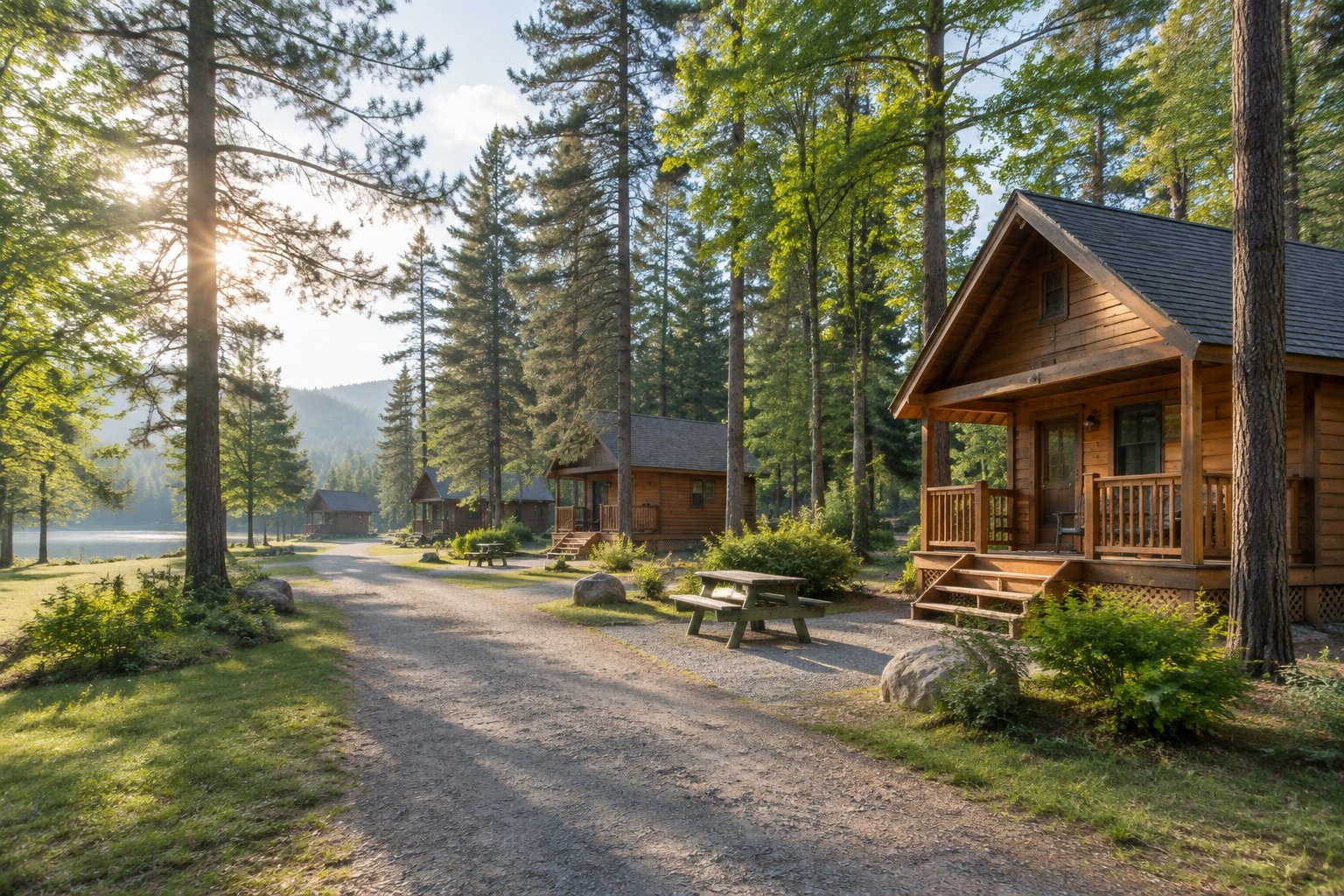
This guide walks through how to search smart, what to check before booking, and which amenities tend to matter once you’re actually there. If you’re weighing cabin camping against tent camping or an RV site for the first time, the beginner’s guide to camping is a good companion read before you commit to a reservation.
How to Find Cabins in Campgrounds Near Me
Finding the right cabin close to home starts with narrowing your search by location and dates, then filtering hard enough that you’re only looking at places that actually fit your trip. Campgrounds, RV resorts, and even national parks list cabin camping options through booking platforms and their own sites, and reading between the lines on reviews and maps saves you from surprises at check-in.
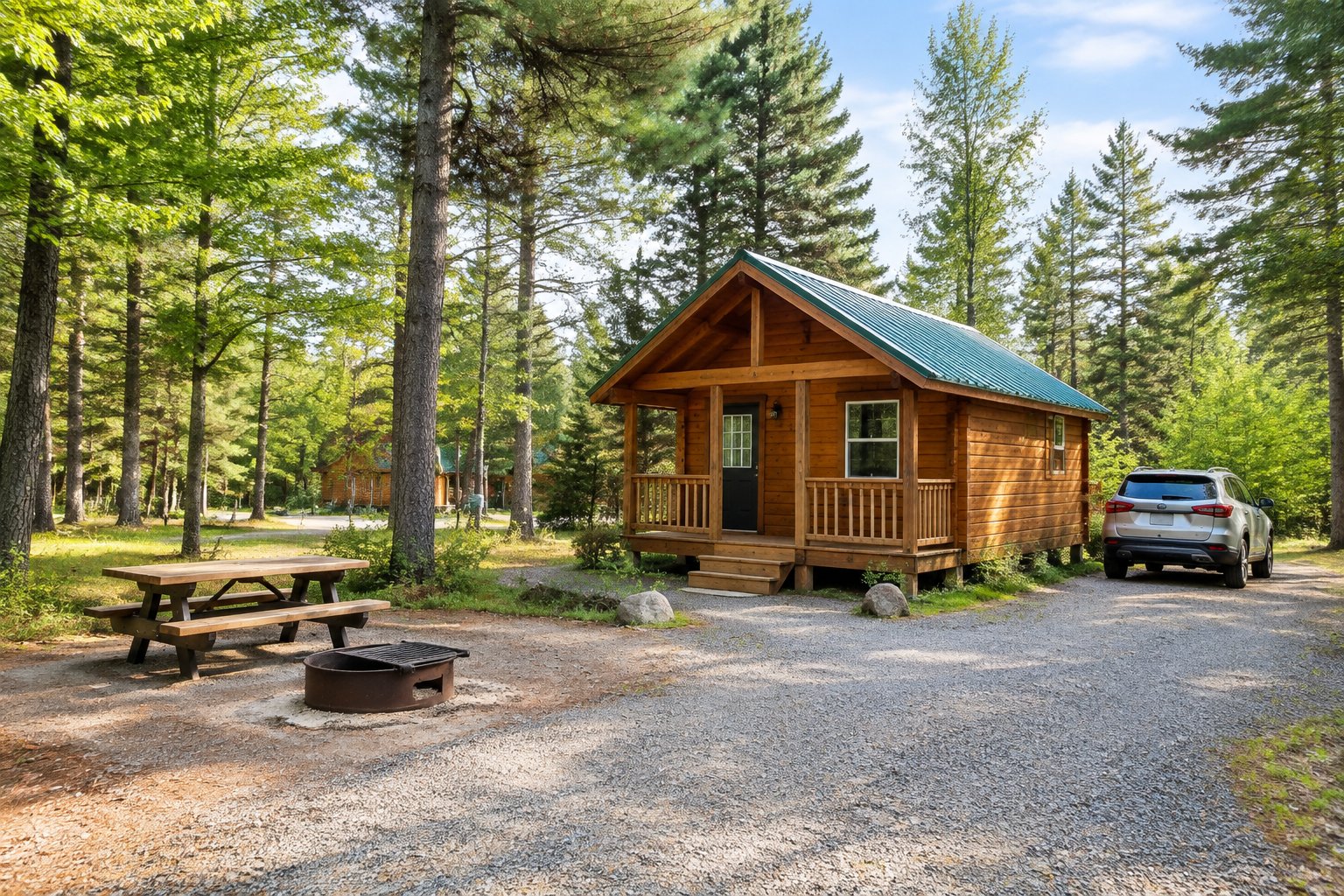
Search by Location, Travel Time, and Dates
Start with a map-based search rather than a general list. Platforms like Hipcamp and Campspot let you drop a pin or type in your town and see cabin camping options sorted by distance, which beats scrolling through statewide results.
Set your actual travel dates early, even if they’re flexible. Cabin inventory at popular campsites can shrink fast once weekends fill in, especially near national parks.
Use Filters to Find Cabins in Campgrounds Near Me
Filter by site type first: cabin, RV site, or tent site, so you’re not wading through camping sites that don’t apply. Pitchup offers filters covering site type and campground facilities, which helps you skip campgrounds that don’t have what you need.
Add filters for pet policies, hookups, or bathroom access if those matter to your group. Narrowing early keeps the browsing part short.
Read Recent Reviews and Check the Campground Map
Recent reviews tell you more than star ratings alone. Look for mentions of cabin cleanliness, noise from nearby sites, and whether the listing photos match reality.
Check the campground’s site map before booking, if one is available. It shows you how close your cabin sits to the bathhouse, the playground, or a busy road, details that matter more once you’re there than they seemed during booking.
Set Availability Alerts for Sold-Out Weekends
Availability alerts notify you when a cabin opens up from a cancellation, which matters most for sought-after weekends near national parks or during peak fall and summer months. Some campground booking tools let you set alerts for specific dates and get notified the moment a cabin opens up.
This beats refreshing a booking page every few hours. Set the alert once, then let it do the checking for you.
Choose a Cabin That Fits Your Trip
The cabin you book should match your comfort needs and your group size, not just the prettiest photo in the listing. Cabin rentals span a wide range, from bare-bones camping cabins to fully furnished rental cabins, and picking the wrong type is the most common regret first-time cabin campers mention.
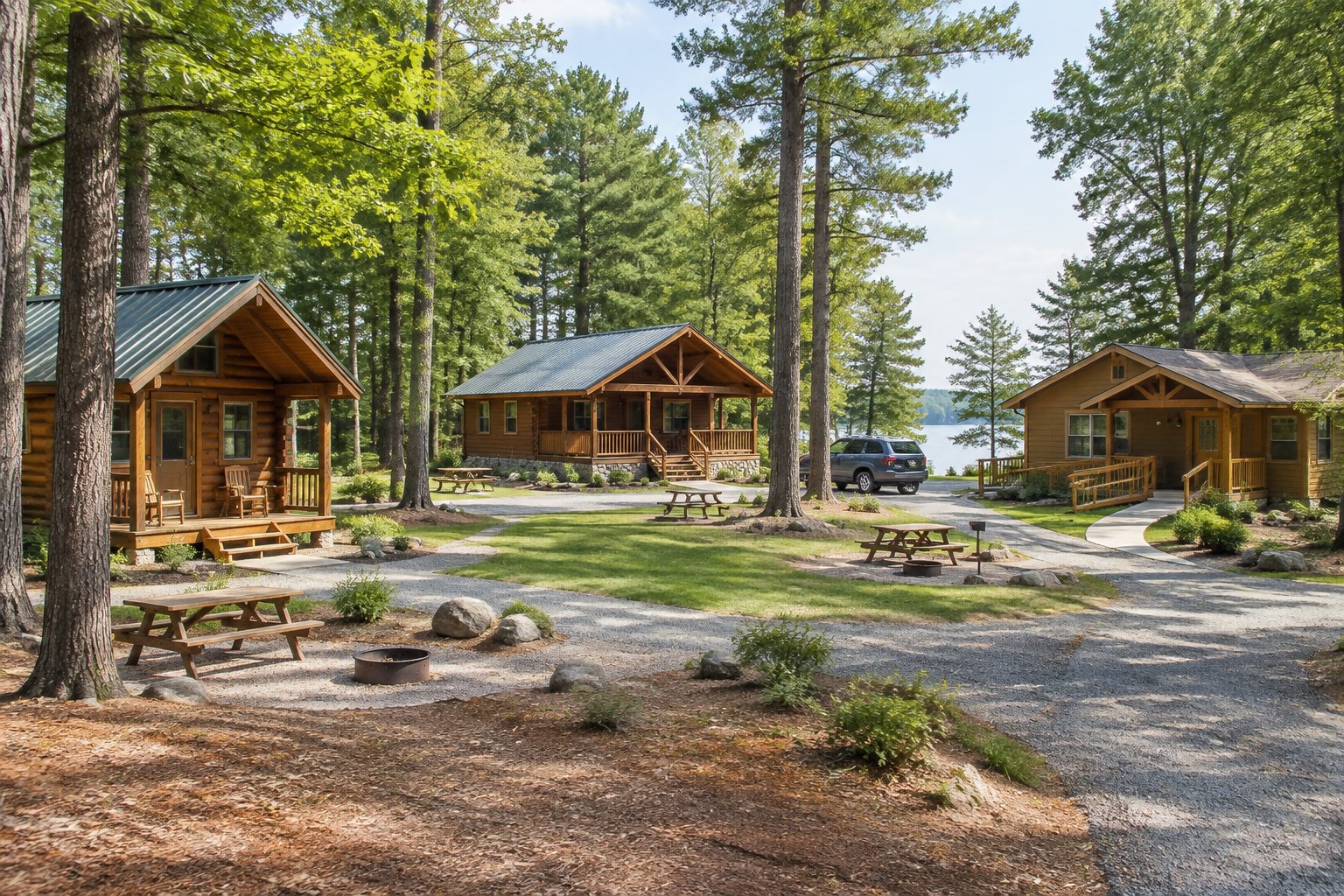
What Is the Difference Between a Camping Cabin and a Rental Cabin?
A camping cabin provides basic shelter with beds, sturdy walls, and electricity, requiring you to use a shared bathhouse and pack your own linens. A rental cabin functions like a furnished vacation cottage, featuring private restrooms, kitchen appliances, and climate control.
KOA describes its cabins as offering electricity, private or nearby shared restrooms, and room for four to six people, with some locations adding kitchenettes, porches, and grills, according to KOA’s cabin camping page. Reading the amenity list closely before booking tells you which version you’re getting.
When Cabin Camping Makes More Sense Than Tent Camping
Cabin camping makes sense when you want the outdoor experience without owning or hauling gear, or when the weather forecast looks unpredictable. KOA notes that cabins let campers extend their season into cooler spring and fall months when tent camping feels less appealing, and that no tent or sleeping gear is required to book one, according to KOA’s overview of cabin camping benefits.
It’s also a practical way to bring reluctant campers along, since a bed and solid walls take a lot of hesitation out of a first trip.
Can Your Group Camp Together in a Cabin, RV Site, or Tent Site?
Group size and mobility needs often decide the format faster than preference does. Camping cabins at many campgrounds sleep four to six people, according to KOA’s cabin amenities page, while some parks cap cabins at six occupants, as outlined in NOVA Parks’ campground FAQ.
Larger families sometimes book a cabin alongside a nearby RV site or tent site so everyone stays close without cramming into one space. Check occupancy limits before assuming a cabin fits your whole crew.
Which Campground Amenities Matter Most?
Amenities decide whether a campground feels convenient or frustrating once you’ve unpacked. Hot showers, a general store, and reliable restrooms cover the basics, while extras like a pool, playground, or mini golf course turn a stay into something the kids ask to repeat.
Comfort Essentials to Confirm Before You Book
Hot showers, clean restrooms, and a dump station for RVs are worth confirming directly rather than assuming. A general store or snack stand nearby saves a supply run into town if you forget something basic.
Some campgrounds add a restaurant or ice cream stand on-site, which is a small detail that makes evenings easier with kids in tow.
Family Activities That Can Make the Stay Easier
A pool, playground, or clubhouse gives kids something to do between hikes, and a pavilion is handy for a rained-out afternoon. Many modern campgrounds have added waterparks, mini golf, and an outdoor theater for movie nights, with sites like Inn Town Campground in Nevada City, California offering summer screenings, according to ReserveAmerica’s roundup of modern campground amenities.
Laser tag, basketball courts, and volleyball nets show up at larger family-oriented campgrounds and RV resorts, and golf cart rentals help older or less mobile guests get around a sprawling property without much walking.
Outdoor Recreation Near Your Cabin
A sandy beach, fishing pond, or network of scenic hiking trails and biking trails extends the day beyond the cabin itself. If fishing is part of the plan, brushing up on techniques like how to catch bluegill before you go means less time figuring things out lakeside.
Ask whether hiking trails connect directly from the campground or require a drive, since that changes how much gear you need to bring along.
Pet-Friendly Features and On-Site Conveniences
A dog park lets you skip the leash for a while, and it’s worth checking policies before you assume pets are welcome in the cabin itself. Some parks allow pets on campsites but not inside cabins, a distinction NOVA Parks makes explicit for its own properties, according to NOVA Parks’ cabin and campsite FAQ.
Special events and planned activities, from pancake breakfasts to holiday festivals, round out the calendar at bigger campgrounds and are worth checking if you’re traveling during a themed weekend. Some resorts also host evening entertainment at an outdoor theater, making it easy to unwind together after a day outside.
Plan Dates, Budget, and a Smooth Check-In
Booking early and packing light are the two habits that make cabin camping easy, and both come down to understanding what’s included before you arrive. Prices, amenities, and minimum stays vary enough between campgrounds that a quick check beforehand avoids surprises at check-in.
How Much Does Cabin Camping Cost?
Cabin camping generally costs less than a hotel room while including access to the whole campground’s amenities. KOA describes its cabins as often cheaper than hotel stays once amenities are factored in, according to KOA’s cabin camping overview, though exact rates vary by location, season, and cabin type.
Ask the campground directly for current rates on your dates, since weekend and holiday pricing often differs from midweek stays.
What Is Usually Included in a Campground Cabin?
Most camping cabins include electricity, beds or bunks, and access to shared restrooms and hot showers nearby. KOA’s cabins typically sleep four to six people across one or two bedrooms, with some locations adding porches, TVs, grills, and kitchenettes, according to KOA’s list of cabin amenities.
Rental cabins add more: private bathrooms, full kitchens, and sometimes linens, so always check the specific listing rather than assuming.
When Should You Book for Peak Season?
Book as far ahead as you can once you know your dates, especially for summer weekends or stays near national parks. Cabin inventory at popular campgrounds and RV resorts near destinations like Rocky Mountain or Glacier National Park tends to disappear months before the season starts.
Shoulder season, the weeks just before or after peak summer, tends to offer better availability and a quieter campground overall.
What to Pack for a Cabin Stay
Packing for campground cabins depends on whether you reserve a rustic bunkhouse or a deluxe cottage. Double-check your cabin’s inventory list so you only pack what is necessary.
- Bedding: Sleeping bags, pillows, or sheet sets (unless linen service is confirmed).
- Cooking Gear: Portable cooler, camp stove, mess kits, and basic utensils.
- Camp Essentials: Flashlights, headlamps, matches, bug spray, and weather-appropriate layers.
- Toiletries: Quick-drying towels, flip-flops for shared showers, and personal hygiene items.
If you’re new to camping trips generally, the beginner’s family camping guide covers packing basics that apply whether you’re in a cabin, an RV, or a tent.
Start With the Cabin Experience You Want
The clearest way to plan a cabin trip is to decide what kind of outdoor setting you’re after first, then search for campgrounds near that landscape. A quiet wooded cabin near Shenandoah National Park offers a different pace than a family-heavy RV resort near a lake, and both fall under the umbrella of cabin camping.
If you want mountain scenery within a short drive of trailheads, campgrounds near Rocky Mountain National Park or Glacier National Park tend to book their cabins early for summer.
Olympic National Park’s mix of coastline and forest draws a similar rush for cabin camping in spring and early fall. Shenandoah National Park’s cabins and nearby campgrounds suit travelers who want scenic hiking trails and ridge views without a long drive from major East Coast cities.
Yellowstone National Park’s surrounding campgrounds and cabin rentals fill up especially fast given the park’s wildlife viewing and geothermal features. Booking six months out isn’t unusual for peak summer weeks near any of these parks.
Matching the landscape to your trip first, then checking cabin availability against your dates, keeps the search focused instead of overwhelming.
Conclusion
Finding the right cabin at a nearby campground comes down to matching a few things: your location and dates, the type of cabin that fits your comfort needs, and the amenities that make a stay easier for your group. Camping cabins and rental cabins serve different kinds of trips, so checking what’s actually included before booking saves confusion at check-in.
When searching for cabins in campgrounds near me, setting availability alerts and reserving early ensures you secure prime dates at the best rates.
Frequently Asked Questions
How do I find cabins in campgrounds close to me?
Use a map-based search on a camping platform and filter specifically for cabins rather than tent or RV sites. Setting your travel dates early and checking recent reviews helps confirm the cabin and campground match what you’re picturing.
How much does cabin camping cost per night?
Cabin camping costs vary by location, season, and cabin type, but KOA describes its cabins as often priced below comparable hotel stays once campground amenities are included. Contact the specific campground for current nightly rates on your dates.
Do campground cabins have bathrooms and kitchens?
It depends on the cabin type: basic camping cabins usually rely on shared bathhouses, while furnished rental cabins often include a private bathroom and kitchenette. Always check the individual listing, since KOA and similar campgrounds offer both styles.
Are cabins at campgrounds better than tent camping for families?
Cabins remove the need to pack a tent and sleeping gear, which makes camping easier for families new to it or traveling with reluctant campers. KOA notes that cabin camping extends the comfortable camping season into cooler spring and fall months when tent camping feels less inviting.
Where can I find cabin camping in California?
California has cabin camping options ranging from national forest campgrounds to family resorts, with many listed on map-based platforms that let you filter by cabin type and distance. Checking availability early matters most near popular destinations like Yosemite or Sequoia National Park, where summer cabins book out quickly.
Can I bring my dog to a campground cabin?
Pet policies vary by campground, and some allow dogs at campsites but not inside cabins themselves, as NOVA Parks specifies for its own properties. Many larger campgrounds also offer a dedicated dog park, so check both the pet policy and on-site amenities before booking if you’re traveling with a pet.