
A good weekend outdoors starts with a shelter that keeps you dry, handles the wind, and doesn’t take an hour to pitch. A 4 person tent hits a sweet spot for most campers: enough room for a small family or two adults with gear, without the bulk of a giant cabin tent eating up your trunk space.
It’s also light enough to carry around if you’re hiking for a decent amount of time. Modern 4-person tents offer a useful balance of interior space and simple pitching, whether you’re heading to a state park campground or setting up at a music festival.
Camping tents have come a long way from heavy canvas setups that took two people and a mallet to raise. Most 4 person tents now use lightweight aluminum or fiberglass poles, weatherproof rainflies, and color-coded clips, letting one person set up camp in under ten minutes.
The best tents balance livable interior space with a manageable pack size, so you’re not sacrificing comfort at the campsite or your back during the hike to it.
Choosing the right four-person tent comes down to a few practical questions: how much floor space you need, how well it handles rain and wind, and how easy it is to pitch after a long drive.
Picks are based on manufacturer specs, verified buyer photos, and owner reviews:
Best for family car camping: Coleman Sundome Camping Tent
Best for backpacking trips: Kelty Grand Mesa Backpacking Tent
Best for standing headroom: UNP Cabin Tent
Best budget pick: Amazon Basics Camping Tent
Best for extra headroom in a compact footprint: Coleman Skydome Camping Tent
Coleman Sundome Camping Tent
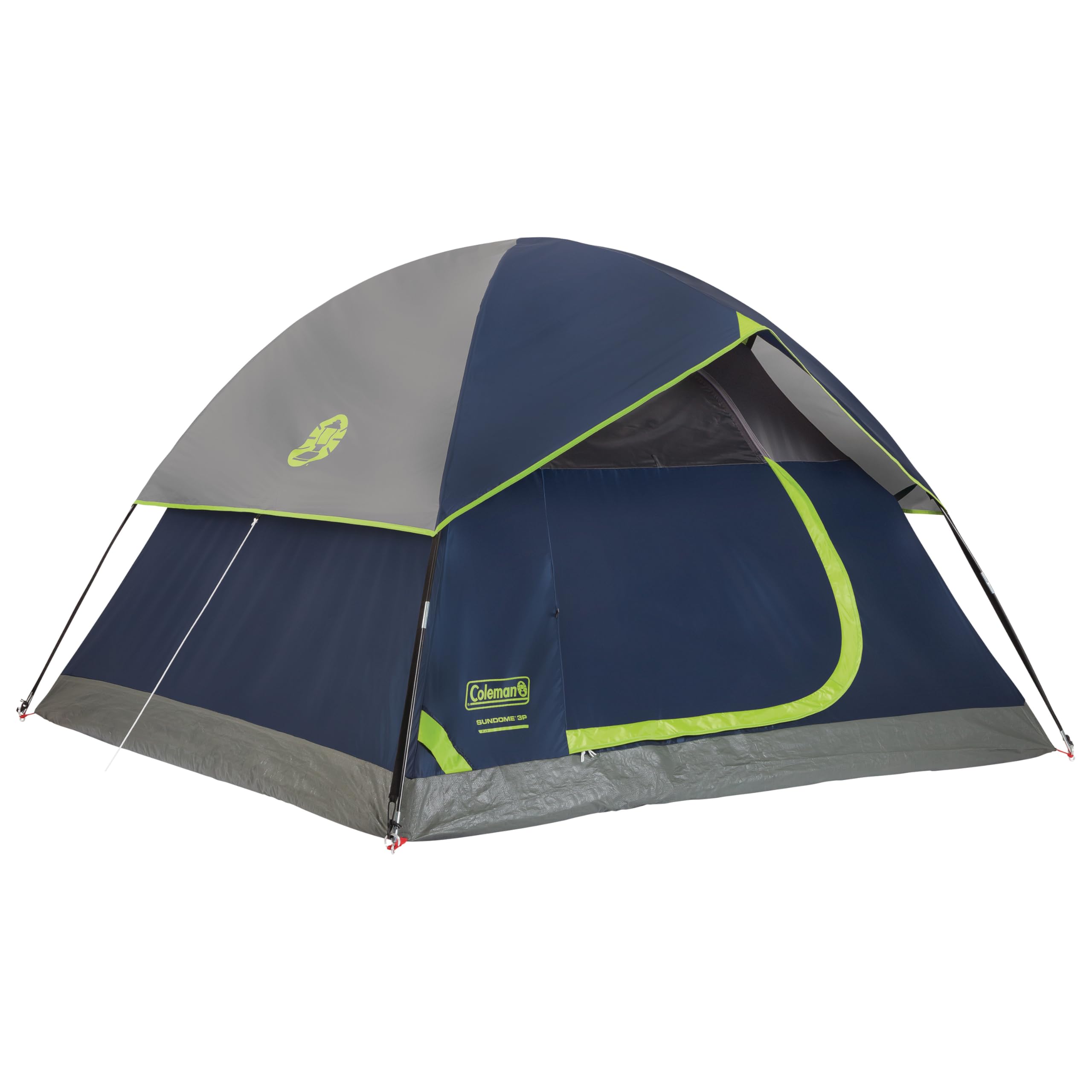
This is a solid grab-and-go tent for families who want reliable weather protection without a complicated setup. For families on a budget, this is one of the better tents for the money.
Price tier: $
Pros
- Withstands winds up to 35 mph
- Includes a rainfly which adds real weather protection
- 10 minute setup and easy breakdown
Cons
- Center height is under 5 feet, so adults can’t stand
- Only one door for entry and exit
- Ground vent design means some airflow tradeoffs in humid weather
The Sundome fits a queen-size air mattress comfortably, making it a favorite for car camping trips. Large windows and a ground vent keep air moving on warm nights, while the E-Port lets you run an extension cord inside without unzipping a door.
The simple pole-and-clip system lets two people finish setup quickly. For readers just getting into the hobby, this tent pairs well with tips from the ultimate beginners guide to camping, especially when choosing a good tent site.
Kelty Grand Mesa Backpacking Tent
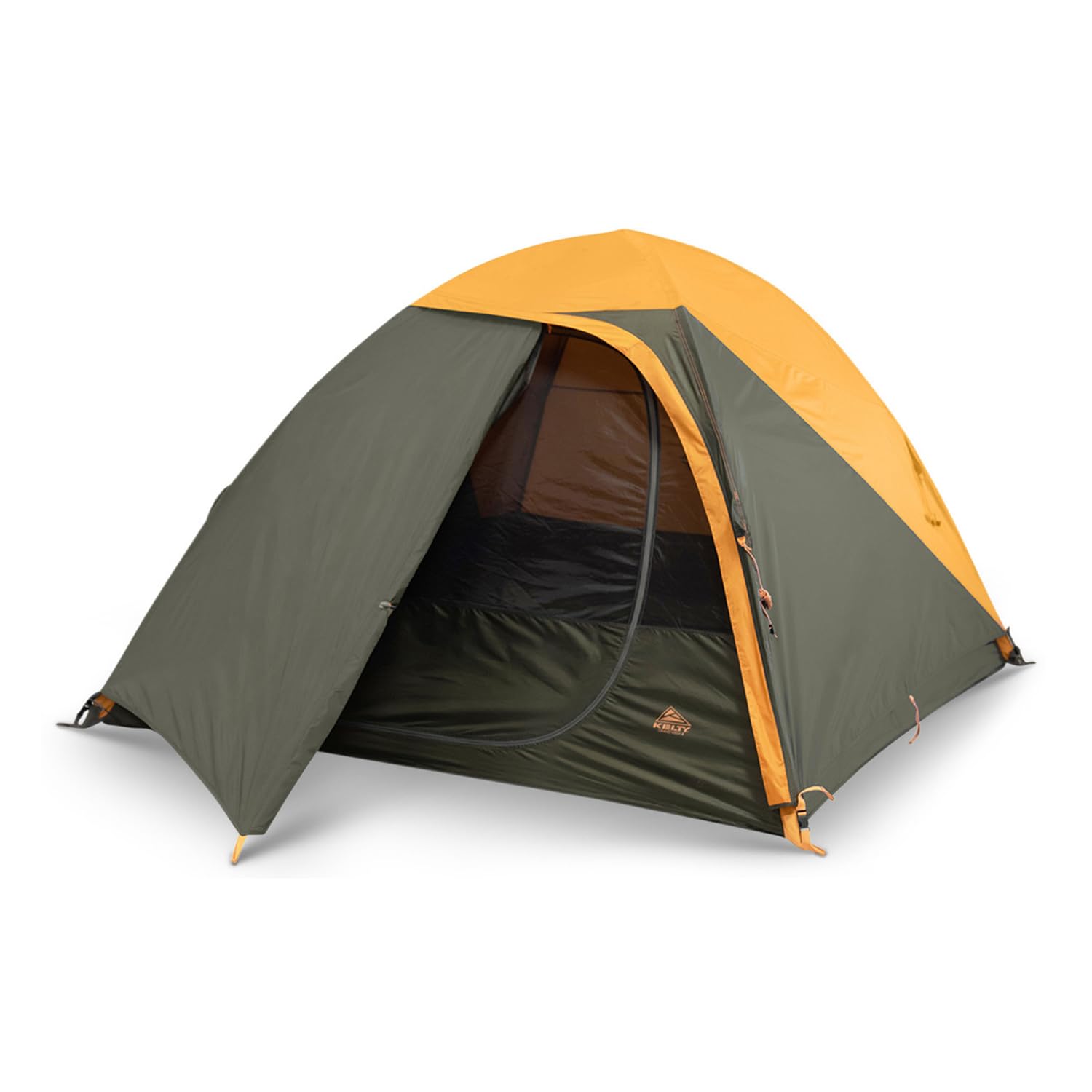
As an efficient 4-person backpacking tent, this shelter suits hikers who need packable reliability without giving up interior room. This is a trail built tent, great for hiking, backpacking or just camping along the river fishing.
Price tier: $
Pros
- Freestanding tent design can be repositioned after pitching
- Only two poles, with quick corners for fast assembly
- Vestibule adds extra covered storage for gear
Cons
- Peak height of 56 inches limits standing room
- Single door can be inconvenient with four sleepers
- Smaller floor area than dedicated car camping tents
Kelty built this one for the trail, and it shows in the details. The 68D polyester floor and fully taped seams keep water out during unexpected downpours, while the aluminum pressfit poles pack down small enough for a backpack.
The Shark Mouth stuff sack makes breaking camp less of a wrestling match. Anyone planning a longer trip should also check the ultimate beginners family camping guide for packing checklists that pair well with a backpacking tent like this.
UNP Cabin Tent
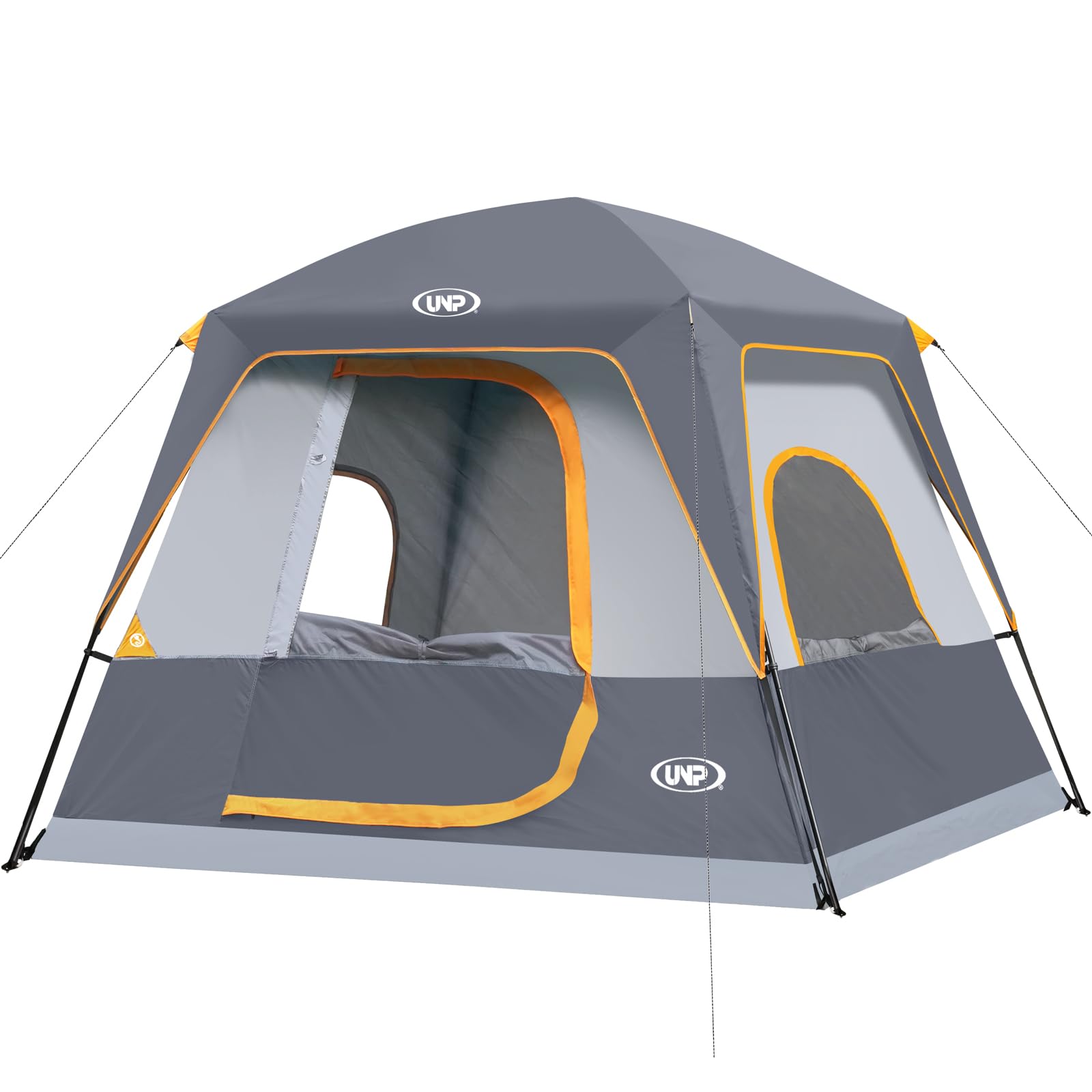
Campers who want to stand up fully inside their tent will appreciate this cabin-style design.
Price tier: $
Pros
- 72-inch center height allows most adults to stand
- Near-vertical walls maximize usable floor space
- Mesh windows and roof panel improve airflow
Cons
- Steel pole frame adds weight compared to aluminum
- Rainfly only covers the top, not full tent walls
- Dry clean only care instructions are inconvenient
The straight walls on this cabin tent make it feel much bigger than its footprint suggests. Four steel poles and a rectangular roof design keep the structure steady in gusty conditions, while two mesh windows and a mesh door help with ventilation on warm nights.
Setup takes about 10-15 minutes realistically for two people. Families who prioritize comfort over pack weight tend to like this style best for weekend campground stays.
Amazon Basics Camping Tent
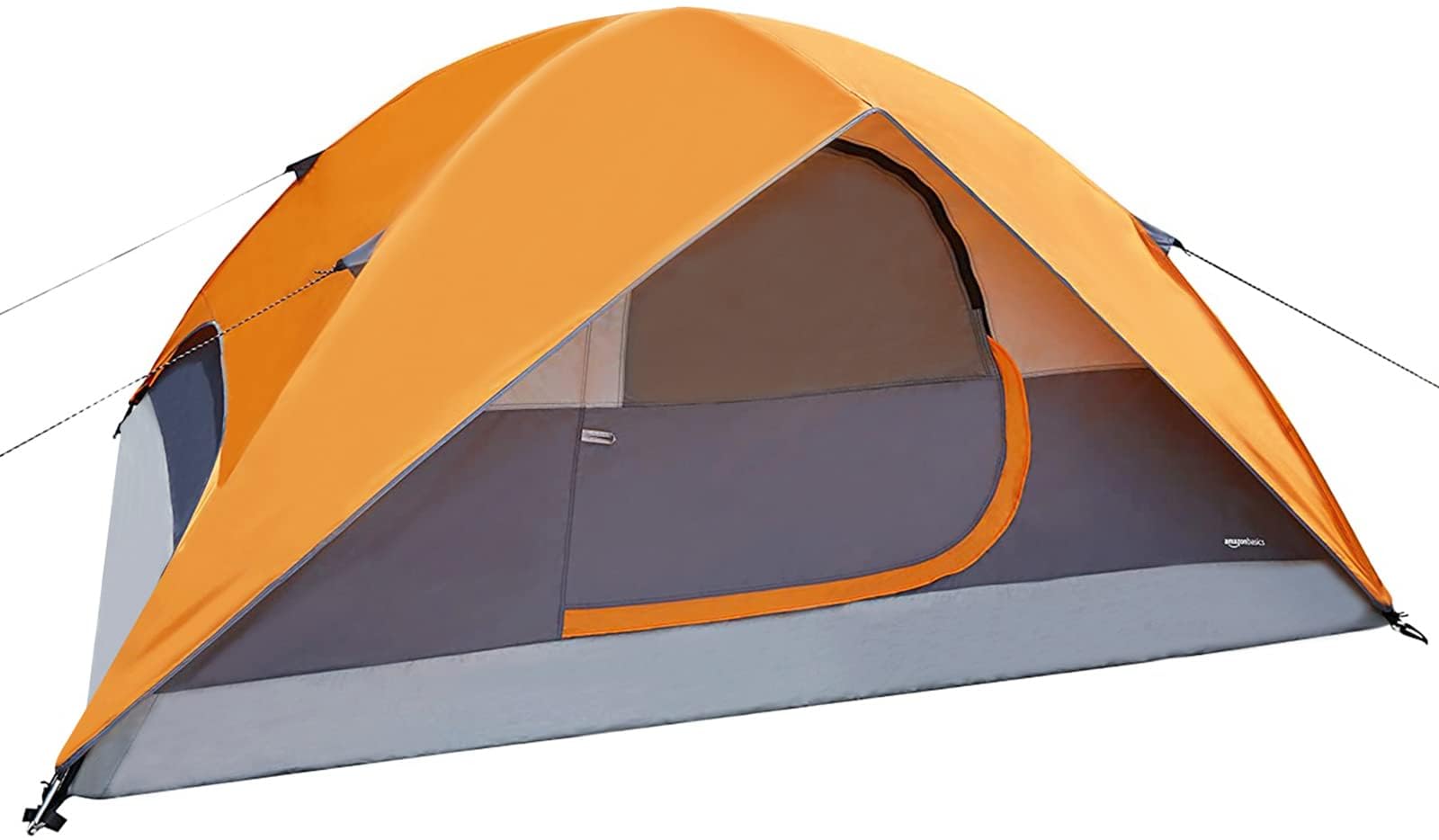
This is a smart pick for first-time campers who want dependable shelter without spending a lot.
Price tier: $
Pros
- Competitively priced for the included features
- Welded seams help resist leaks
- Setup takes under 10 minutes with shock-corded poles
Cons
- Some owners note the zipper quality could be better
- Guy lines could use more visibility at night
- Fiberglass poles feel less durable than aluminum
Owner reviews support the value here, with several campers reporting that the tent stayed dry through heavy storms and high winds. The back window and cool-air port help with airflow, while the interior mesh pocket keeps small items organized.
It’s not built for heavy, frequent use, but for occasional trips it performs well above its price point.
Coleman Skydome Camping Tent
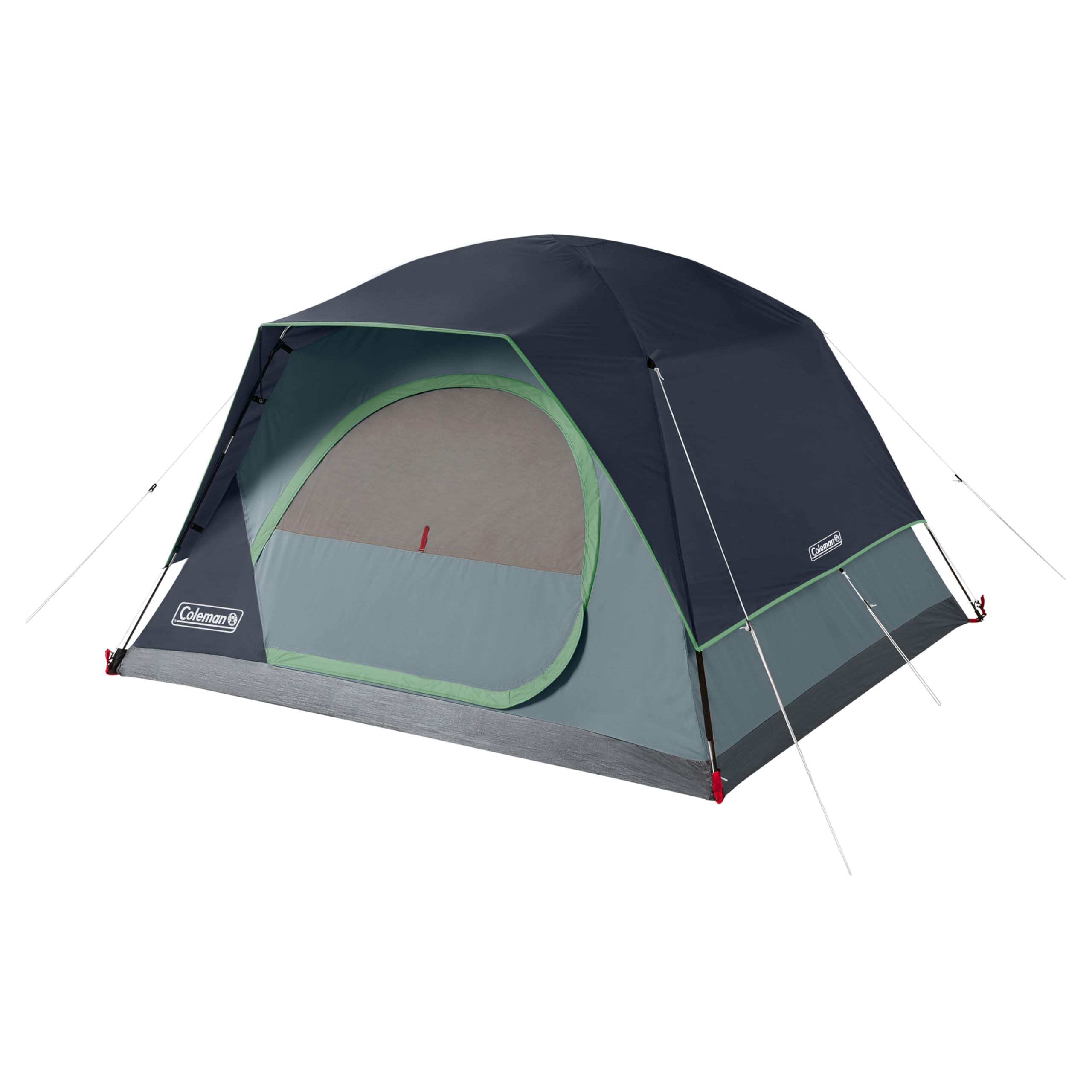
Campers who want more headroom without a bulky cabin tent should look at this Skydome model.
Price tier: $
Pros
- Nearly vertical walls add 20% more headroom than traditional dome tents
- Pre-attached poles speed up setup to under 5 minutes
- Wider door makes loading air mattresses easier
Cons
- Some reviewers report pole breakage in strong wind
- Rainfly seams have leaked for a few owners in heavy rain
- Setup instructions could be clearer for first-timers
The WeatherTec system, with welded corners and inverted seams, is designed to keep water from pooling underneath the tent floor. Most owners report a comfortable fit for a queen-size air mattress plus extra gear.
Wind performance has drawn mixed feedback, so staking it down securely in exposed campsites matters more with this design than with heavier dome tents.
Buying Guide
Picking a 4 person tent comes down to matching the design to how and where you plan to camp. Floor space, weight, and weather protection all shape daily comfort at the campsite.
Floor Space and Shape
Look at square footage, not just the “4 person” label. Many 4 person tents list between 55 and 65 square feet, which fits four sleeping bags snugly with little room for gear.
Cabin-style tents with straight walls generally feel roomier than dome tents with the same footprint, since dome shapes taper inward near the top.
Weight and Packability
Weight matters most if you’re carrying the tent any distance. Dedicated 4-person backpacking tents often weigh 4 to 7 pounds, while cabin and dome car camping tents can weigh 9 to 13 pounds or more.
If the tent goes straight from the car trunk to the campsite, extra weight isn’t a real concern. But if you’re hiking in, every pound counts. Those trails get long and the gear gets heavy, having a lightweight durable 4 person tent is crucial.
Weather Resistance
A rainfly and sealed seams matter most when you’re trying to stay dry. Check the pole material too: aluminum poles resist bending better than fiberglass or steel in windy conditions.
Most options on the market are built as 3-season tents, offering good airflow for summer along with rain coverage for spring and fall. For winter snow loads and severe sub-zero winds, you’ll need a heavier 4-season tent instead.
- Look for a full-coverage rainfly, not just a partial top cover
- Check for taped or welded seams
- Aluminum poles hold up better in wind than fiberglass
Ventilation
Mesh panels, windows, and roof vents keep condensation from building up inside the tent overnight. Tents with only one small window tend to feel stuffy in warm weather, especially when four people are inside.
Ease of Setup
Color-coded poles, clip attachments, and pre-attached pole systems can all cut down setup time. An instant camping tent can get you out of the elements almost immediately after you arrive at camp.
A tent that takes 5 to 10 minutes to pitch alone is a reasonable benchmark for most campers.
Frequently Asked Questions
What is the best 4 person tent to buy for camping?
Finding the best 4-person tent depends on your camping style. Car campers who want fast setup and solid weather protection may do well with a dome tent like the Coleman Sundome, while hikers carrying their gear benefit more from a lighter backpacking design like the Kelty Grand Mesa.
Are 4 person tents waterproof enough for rainy weather?
Most 4-person tents with a rainfly and sealed seams handle moderate rain well. Heavy or sustained downpours put more strain on the seams, so checking for taped seams and a full-coverage rainfly before buying can make a real difference when you’re trying to stay dry.
What is the easiest 4 person tent to set up?
Tents with pre-attached poles and color-coded clips set up the fastest, often in under 5 minutes. An instant camping tent with telescoping poles can pop up in roughly a minute with minimal effort.
The Coleman Skydome and Amazon Basics tent both use quick-connect systems that make solo setup manageable.
What are some affordable 4 person tents with a rainfly?
The Amazon Basics Camping Tent and the Coleman Sundome both include a rainfly at a competitive price point. Both use polyester construction with water-resistant coatings that hold up well for casual weekend trips.
Should I choose a 4 person tent with a vestibule?
A vestibule is worth choosing if you need extra covered space for boots, packs, or wet gear outside the sleeping area. Backpacking tents like the Kelty Grand Mesa include one, while many dome and cabin tents skip it to save weight and cost.
What are the dimensions of a Coleman 4 person tent?
The Coleman Sundome measures 9 by 7 feet with a center height of about 4 feet 11 inches. The Coleman Skydome is slightly smaller at 8 by 7 feet, but its nearly vertical walls provide extra headroom.
Wrap-Up & Recommendations
Choosing the best 4-person tent really comes down to matching the shelter’s specs with your trip style. Casual car campers on a budget should get reliable weather protection and straightforward setup from the Coleman Sundome or Amazon Basics models.
If interior living space matters most, the UNP Cabin Tent offers exceptional standing room. For trail trips, the lightweight Kelty Grand Mesa remains a standout pick.
The Coleman Skydome lands somewhere in between, with generous headroom and a quick-pitch design.